
How to be a Bard
On The Persistence of Druidry and Bardic Song during the Romantic Revival and in the Work of Gary Snyder


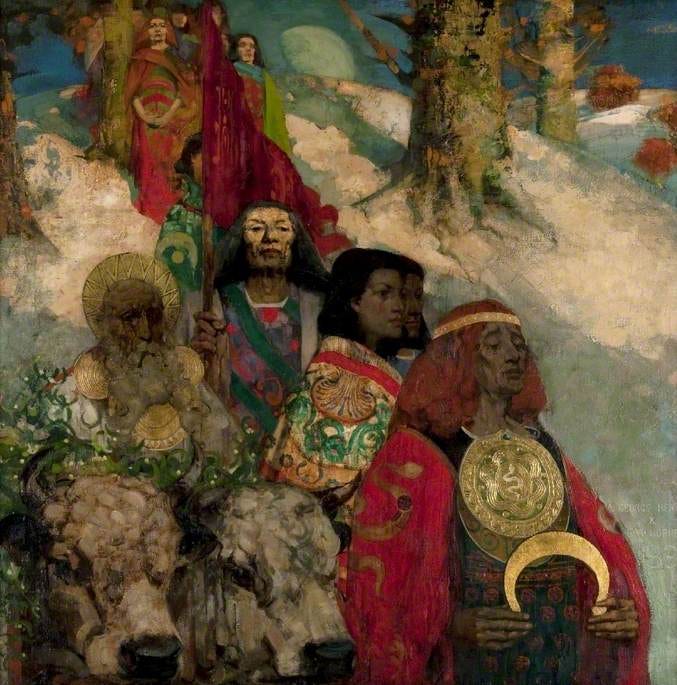
Many wonder why I go on about Bards all the time. Here’s the thing: I’m a big fan of the Druid tradition reconstructed in Wales and Britain during the eighteenth century even as the Romantic movement was gaining strength.Was there a Druid Revival? Yes, there was.
In one sense druidry is a “third option” between what John Michael Greer in his essay on the origins of the Druid Revival calls “murderously dogmatic religion and spiritually barren materialism.” This third option had sprung up in the aftermath of the Thirty Years War (1618-1648) when Catholics and Protestants gleefully slaughtered each other throughout Europe. Even more to the point in this regard is the English Civil War, waged between 1642 to 1651, with its bitter religious and political strife.
One answer to such brutality was to leave dogmatic religion behind. Scientific materialism was in the ascendancy and a new class of priests, scientists, would soon don their sacred robes, or lab coats, and proclaim the universe a clockwork contraption: the machine. And then they did their best to make as many machines as they could. It was their version of the imitatio dei.
Meanwhile antiquarians like John Aubrey were exploring the megalithic stone sites scattered throughout the British Isles. Aubrey made a systematic examination of Averbury, and in the process found clues that pointed to those who lived on the land in ancient times: the Druids.
The name Druid translates as “oak knowledge.” Linguistically it comes from the proto-Celtic words derwo (oak) and weyd (to know). Druids were the ones who knew the oak trees. Not much was known about their exact activities, but the Romans had kept records and Pliny the Elder recounts their ritual activity in sacred groves of trees. They kept no surviving written accounts themselves, but were considered masters of memory with a vast oral corpus of practical and sacred lore. As keepers of wisdom and long memory the Druids filled respected positions as priests, judges, teachers and mediators of law. The remnant of their presence in the existing cultural record was enough to inspire a new spiritual impulse.
The seeds Aubrey planted have been growing ever since. Contemporary Druidry as such makes no claim that it is connected to an ancient tradition. It is from the fruit of the seventeenth and eighteenth centuries that people still find spiritual nourishment in a diverse living praxis that continues to grow and evolve.
Greer again writes:
People all over Britain started trying to tease out Druid secrets from any available source. A surprising number of them went on to become Druids – to embrace a Druid spiritual path in their own lives. The idea of a green way of wisdom, a spirituality rooted in nature and the living earth, exercised a powerful attraction on many people who could not stomach either the rigid dogmatism of organized Christianity or the equally rigid nihilism of the emerging new science. Thus the study of a long-forgotten tradition gave birth to a serious attempt to revive it.
One of the things I find so appealing about Druidry is its absence of prescribed beliefs. Christian Druids sit comfortably alongside polytheistic Druids and even Zen-Sunni Druids. The practices, way of life and experience of spirituality are given more emphasis than holding “correct” beliefs.
Or, in Greer’s words:
A tradition that directed its reverence toward Nature, its disciplines toward the inner dimensions of the self, and its ceremonies toward the turning seasons had no need to impose some fixed definition on the higher realities behind these. People of many different theological opinions could all agree that Nature deserved reverence, hidden potentials of the self were worth uncovering, and the year’s cycle offered good reasons to celebrate. More than that, Druidry did not demand.
In Wales, alongside the eighteenth-century Druid Revival, we can also see a resurgence of interest in traditional storytelling, poetry and music, or the broad ballad revival that shaped the first generation of English Romantics. Bardic festivals dedicated to poetry, storytelling, and song in Wales originate in the twelfth century, when in 1176, the first eisteddfod was held by Lord Rhys at his Cardigan Castle. Other ancient legends trace the competition and gathering back to even earlier times. In the intervening centuries various other Bardic assemblies were held, along with various reforms in the Bardic schools of Wales. Druidry was reimagined again in the eighteenth century by the Gwyneddigion Society in 1789. The great rapscallion Iolo Morganwg put his Druidic revival spin on Bardic matters through ceremonies such as the crowning of the Bard.
In her book The Matter of Wales: Epic Views of a Small Country, Jan Morris claims:
Welsh creativity is unusually disciplined, for since the earliest times the Welsh artistic tradition has been governed by codes and conventions – perhaps since the Druids, relying as they did entirely upon their memories, drew up rules of composition to make it easier for themselves. In the Wales of the Independence the Bards and Harpers were institutionalised, with their own allotted places in society, their established functions to perform. They regarded poetry and music as professions, for the practice of which one must qualify, like a lawyer or a doctor. There were agreed measurements of value for works of art, while poetry was formalized, consisting until the fourteenth century mainly of eulogies and elegies. Musicians were restricted by intricate rules of composition. Poets were governed by the Twenty-Four Strict Metres of the classical Welsh tradition. Among the Cymry Cymraeg the Metres still prevail.
Bardic traditions were equally revered in Ireland and Scotland, where they had their own distinct schools, and various scraps of lore were carried down into modern times. Some of that material found its way into the work of the people involved with the Druid Revival.
And while the Druid Revival has taken its inspiration from Celtic sources, most of the people involved aren’t “plastic paddys” i.e. people assuming a largely imaginary Welsh, Irish or Scotch identity, or pretending to be as such on cosplay weekends. Yet the inspiration from these sources remains. As does inspiration from other traditional storytellers such as the Griots of West Africa.
Thus, in Druidry, Bards are highly respected for their immense “oak knowledge” of poetry, history, songs, stories, traditions. In ancient times Bards were the ones responsible for keeping the store of knowledge in memory and passing it to the next generation. Words held power, and the ability to wield them in multiple and variegated ways was used for spreading wonder and enchantment, or taking down despots and tarnishing their memory through cunning satire. The kings and rulers feared such satirical words. Some of this power yet lingers on and is perhaps why comedians are so feared in our own day and age. It will take some work to restore poets back to their previous stature. Some of that work is the work of re-enchantment. Gary Snyder, author of the 1975 Turtle Island, a collection of poems and essays that is both ecological manifesto and eco-poetry, arguably renovates the Bardic tradition, and Druidism for the post-modern era.
/|\ /|\ /|\
Gary Snyder’s poem, “What You Should Know to Be A Poet” is relevant in this regard. This poem narrates a process of green re-enchantment, as I will show, especially if we recall the soul- and world-repairing functions of a Bard.
What You Should Know to Be a Poet
by Gary Snyder
all you can about animals as persons.
the names of trees and flowers and weeds.
names of stars, and the movements of the planets
and the moon.
your own six senses, with a watchful and elegant mind.
at least one kind of traditional magic:
divination, astrology, the book of changes, the tarot;
dreams.
the illusory demons and illusory shining gods;
kiss the ass of the devil and eat shit;
fuck his horny barbed cock,
fuck the hag,
and all the celestial angels
and maidens perfum’d and golden–
& then love the human: wives husbands and friends.
children’s games, comic books, bubble-gum,
the weirdness of television and advertising.
work, long dry hours of dull work swallowed and accepted
and livd with and finally lovd. exhaustion,
hunger, rest.
the wild freedom of the dance, extasy
silent solitary illumination, entasy
real danger. gambles. and the edge of death.
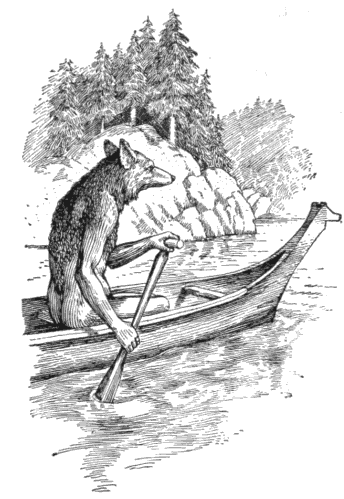
The first stanza of three lines encapsulates three common ways people have found stories across humanity. According to Snyder the first thing a poet should know is “all you can about animals as persons.”
What would the world look like if more people thought of “animals as persons”? Humans rightly lament the slaughter of one another in our endless wars and battles, but besides a handful of vegetarians and vegans who remain a minority, most people don’t think much of munching down on a steak or a burger. Industrial culture has made the disconnect between a cow in the field and the meat on our plates all the greater. More than an animal rights homily, however, this line concerns the totemic power of animals and their role in traditional stories. Animals are encountered everywhere, from the industrial urban environment to the suburban sprawl, from rural farmlands and forests to untouched pristine wilderness. Nature is a continuum and we are part of it, despite our alienated and deracinated condition. No matter where we live, animals will be encountered. The Bard is at home in the city as much as he is hiking through brush or paddling on a stream. In this waking world, animals cross paths with us as and look to them for guidance, as their appearance is always relevant to our lives.
Creatures are also encountered in the amber field of dreams. These connections should be noted and studied by the aspiring Bard. What kind of animals haunt your dreaming? Spiders haunted my dreams, and I was a mild arachnophobic until I started reading about their role in various world mythologies, and related that to my chosen vocation as a writer. There is probably at least one poem contained in these liminal encounters.
Learning what roles an animal plays within its ecosystem is certainly valuable, useful not only for the preservation of ecosystems, but also in the remediation of those already damaged. Beyond these facts, figures, and statistics, when a person approaches an animal as a person, we can touch something closer to ourselves and our own being—the soul of another.
Learning some of the animal stories from the place where we live is another way to start honoring the animals in our own Bardic practices. Some of it may take you straying into the realm of cryptid lore. The Frogman of Loveland, Ohio is one famous tale emerging out of the Little Miami river that marks one of the boundaries of my watershed. Other stories might take you into the tales of the First Peoples. Knowing some of those stories is a way to honor those who came before.
Still other kinds of animal stories that are local could be about beloved pets, or very specific encounters, stories recounting something an animal did, or even something an animal said. My wife and I were recently at a pond in a nearby nature preserve, watching the turtles when another person pointed out the huge snapping turtle in the pond. It was well over fifty years old and was the biggest of its kind I had ever seen. A sublime being full of stories if only we knew how to speak or hear the turtle tongue. Sitting at the edge of the pond might be a way to dream into that story.
Snyder says a poet should know “the names of trees and flowers and weeds.”
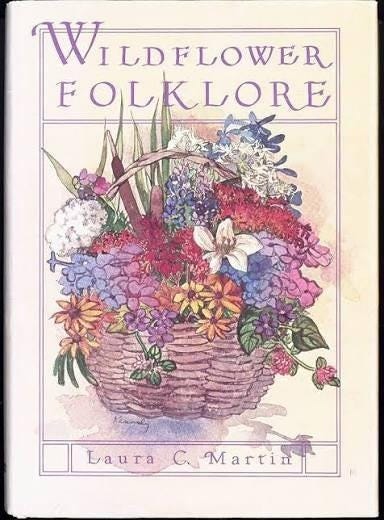
Naming a thing or knowing the name of a thing has long been associated with (esoteric) knowledge. In the Bible, Adam was tasked with naming the animals. Perhaps he also named the plants, or perhaps that was left to someone like his plant loving son, the first gardener and tiller of the soil, Cain. Whatever the case may be, the act of naming itself is important and powerful. Knowing a name also holds power.
According to Robert Essick, in his William Blake and the Language of Adam, Blake uses poetic language not as some tool to classify the world, as did the burgeoning rationalists of his time, but as a living medium that radiates the power of what he names through the power of his words.
Any good poem calls forth its implicit qualities, whether for good or ill, through the power of its words. Poetry can evoke and invoke. Knowing the names of trees, flowers, and weeds asks the poet to be involved in the life of the land. If the name of a plant is known, what else can be known about it? What stories, songs, and myths are associated with the plant? What medicinal virtues do its leaves, roots, and stems hold for us?
I read somewhere that these days children recognize more corporate logos than plant species. Though I cannot place the source of this information, it has the ring of truth. Such a trend must be reversed. Through poetry and storytelling the mysteries of the natural world can be restored. Whatever is going on collectively, a Bard can still cultivate their own knowledge of plants by “ditching screen and embracing the green” as Bard and Druid Dana O’Driscoll puts it.
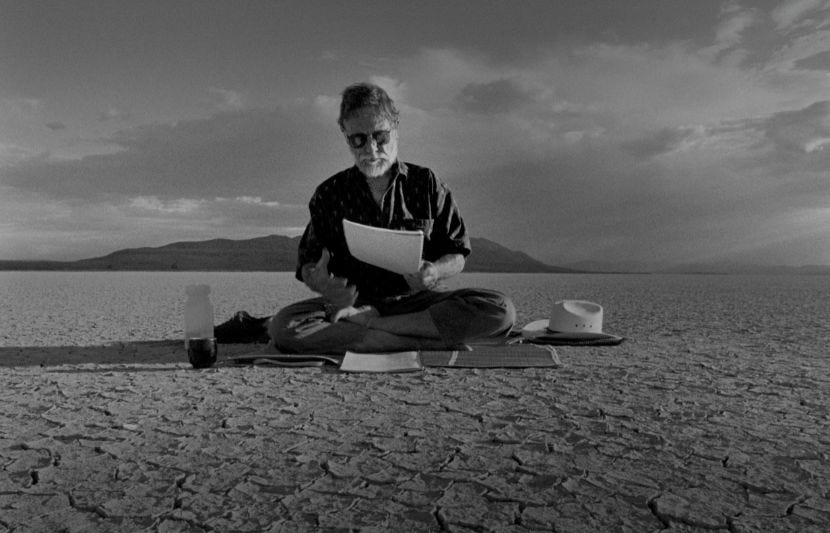
A poet following Snyder’s advice is also called to know the “names of stars, and the movements of the planets / and the moon.” This takes the poet out of the trap of linear time, work schedules, hectic calendars marked with appointments, and moves them out of the realm of momentary and immediate concerns and up onto the stellar observation deck where the really long view is encountered.
This also gives the poet a dose of humility. The power of naming and speaking can get to a person’s head. Despite knowing something about the structure of the universe and realms beyond the material, the vast forces embodied in the stars and planets put short earthly lives into perspective.
The body of myths around constellations in any one culture give a working poet or teller of tales a complete lexicon of stories, especially when combined with plant and animal lore.
Snyder enjoins us to pay attention to “your own six senses, with a watchful elegant mind.”
The mind must be stilled from an excess of voices and internal chatter in order to receive clear messages from the five physical senses. Meditation and contemplation are ways to quiet down all that noise and bullshit inside our heads. When the sounds of society and civilization are quiet, when our own senses of perception get refined, then our nervous system can be prepared to receive information from beyond ourselves.
Poetic insight is formed by paying attention to what all of our senses are telling us. Polishing the glass of intuition so that it may see clearly and also reflect the light is part and parcel of having a “watchful and elegant mind.”
From the depths of stillness the stirrings of poetic voice emerge.
Another way to develop intuition is by practicing a traditional form of divination. Snyder suggests aspiring poets should know, “at least one kind of traditional magic / divination, astrology, the book of changes, the tarot.” Contained in these two lines are the briefest of instructions for another few lifetimes of work ahead.
Divination is a great place to start for those seeking to learn the varied arts of magic. I have been studying and using the I Ching for the past three years. I feel like I could spend a lifetime studying the Book of Changes, as many, many, many others before me have.
Christian readers and those following other Abrahamic faiths may feel resistance and fear around the idea of practicing magic (though by all accounts, there are many learned astrologers in the Islamic world). Yet even in the Bible we read accounts of casting lots.
In Proverbs 16:33, we are told that, “The lot is cast into the lap, but its every decision is from the Lord.” If you look at it this way, the practice of casting lots was a way to discover the will of the Divine. People have been using such randomized methods of symbol interpretation since time immemorial. The study of such things is something a poet would want to know. They are something, especially, a Bard would want to know. Poets, seeing into the unseen as they do, often begin to develop a reputation as they gather wisdom across the span of their life, and being able to share that wisdom with others becomes a part of their essential work in the community.
Bibliomancy with the Bible (opening it to a random page when seeking guidance) is another way those of faith might bypass the strictures against divination also found in the Bible. The rich tradition of Christian folk magic in the Southern states of America is another avenue of investigation, as is the work of the Hexenmeisters among the Pennsylvania Dutch. The world of the Jewish Kabbalah offers its own lifetime of rich discovery.
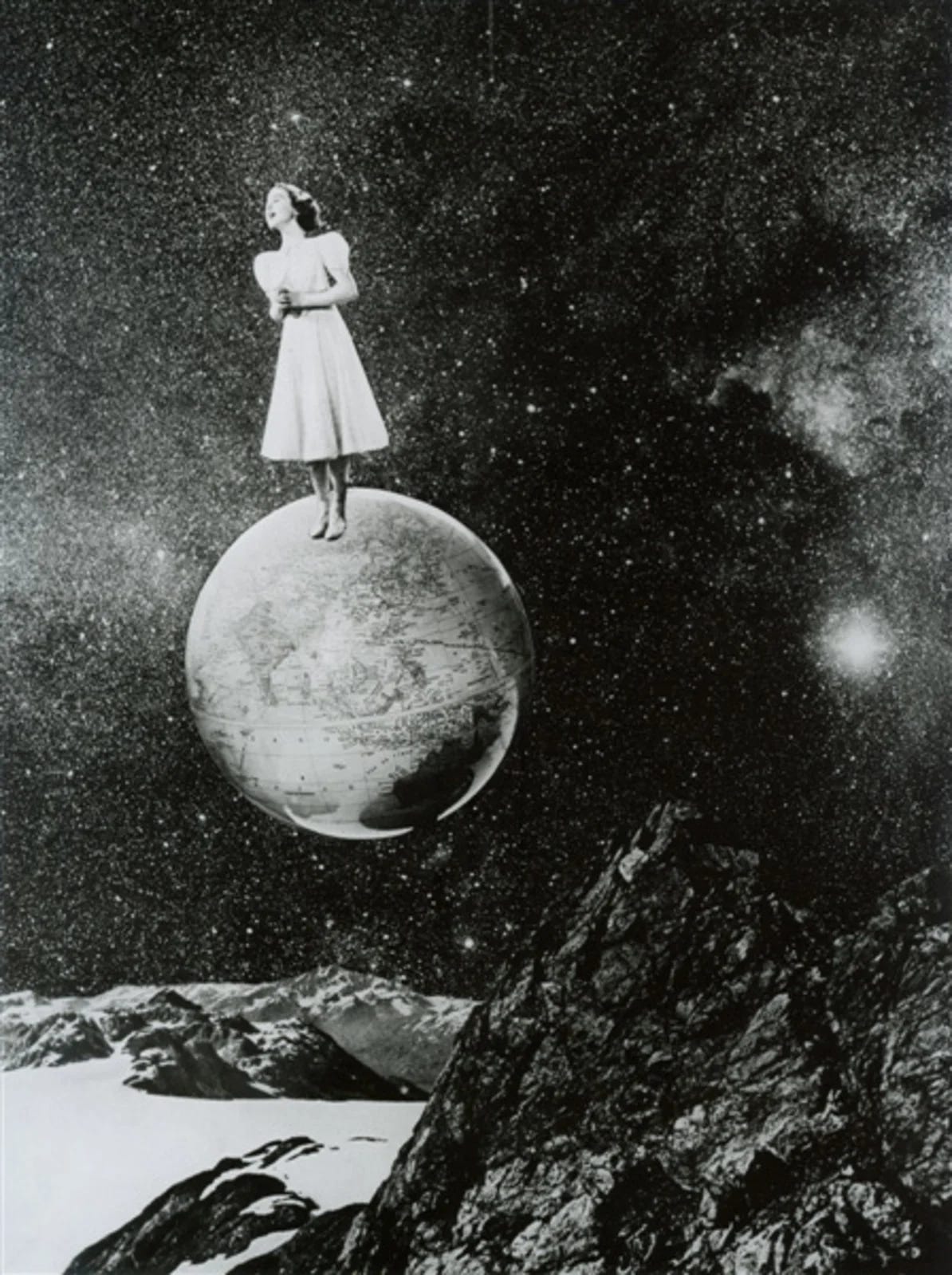
Next Snyder speaks of dreams: “dreams. / the illusory demons and illusory shining gods”
Here the Bard enters the astral realms. As a source for stories, it is unparalleled. Yet not everything that appears in the astral realm is as it seems. As a source of knowledge one should be careful. Discernment is called for. Some dreams appear to be gibberish, others are total revelations where contact with higher powers is without question.
Keeping a dream journal is one way to have an instant source of ideas for poems, stories, songs.
Yet demons are also here. Not everything in the spiritual world is our friend. This was known to most people, before rationalism took its hold on everything, including religion itself. Tread carefully in the world of dreams. Not everyone there has your wellbeing as their intention. Just as there are predators in the human world, so in the dreamlands. But also as there are mentors, guides, sources of wisdom and creativity to be found in the dreaming.
Calling these things illusory is a reflection of Snyder’s dedication to the religious and mystical traditions of the East and the idea that there are levels of reality above and beyond human experience -even beyond astral experience. The metaphysical traditions of the West, while different, also have a parallel, in the idea of their being many planes of existence. “Above” the astral plane are even more divine realities that would make such beings appear illusory.
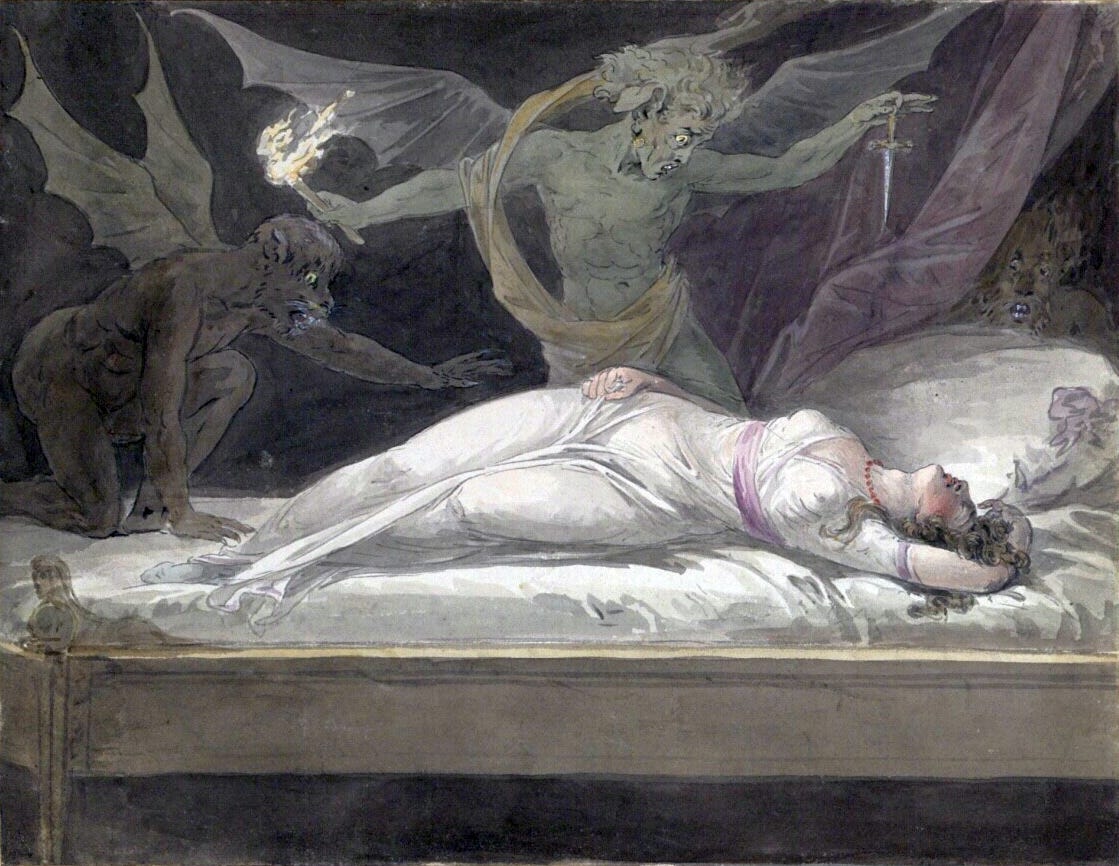
Next Snyder asks us something really wild. If you hadn’t been paying attention until now, this is the stanza that will wake a reader up:
kiss the ass of the devil and eat shit;
fuck his horny barbed cock,
fuck the hag,
and all the celestial angels
and maidens perfum’d and golden–
In the lower astral plane there are many beings who look at humans as a source for a tasty meal, perhaps after their sexual energies get juiced up. Poet’s have often connected with these realities in a most visceral way. It can be thought of as a kind of initiation into the larger realm of the cosmos.
“kissing the ass of the devil” asks the poet to move into the world of heresy. This specific image recalls the accusations against the Knights Templar, who were rumored to have kissed the ass of Baphomet as part of their initiation rites– possibly a metaphor for eating shit. While most will recoil at the image of kissing the devil’s ass and eating his excrementt, eating shit may be equated with the nigredo stage of the divine transformation in the alchemical process. The black and base matter of life must be internalized, and absorbed, before it can be transmuted into the philosophers’ stone. Furthermore, in dream analysis , excrement often equals creative output. Putrefaction transforms into enlightenment. Rotting manure is fertilizer for further life.
All of this is followed up by Snyder suggesting we “fuck the hag,” or the Crone, an elder female embodying the wisdom of hard years long lived. Fucking the hag, we become closer to the mysteries of death.
In dreams of sex, it is often not so much about the physical act, as a passing on of teachings: we merge with the person in the dream. To have intercourse with spiritual beings is to enter into discourse with them. So after these terrifying experiences, just as essential for individuation as the sublime, the bard moves on to the relief brought from the celestial angels and perfumed maidens. When the poet emerges from holy sleep, new powers are found awakening in the soul, gifts from the congress now shared with the spiritual allies who have become their intimates. These beings will turn the tongue silver.
“& then love the human: wives husbands and friends.”
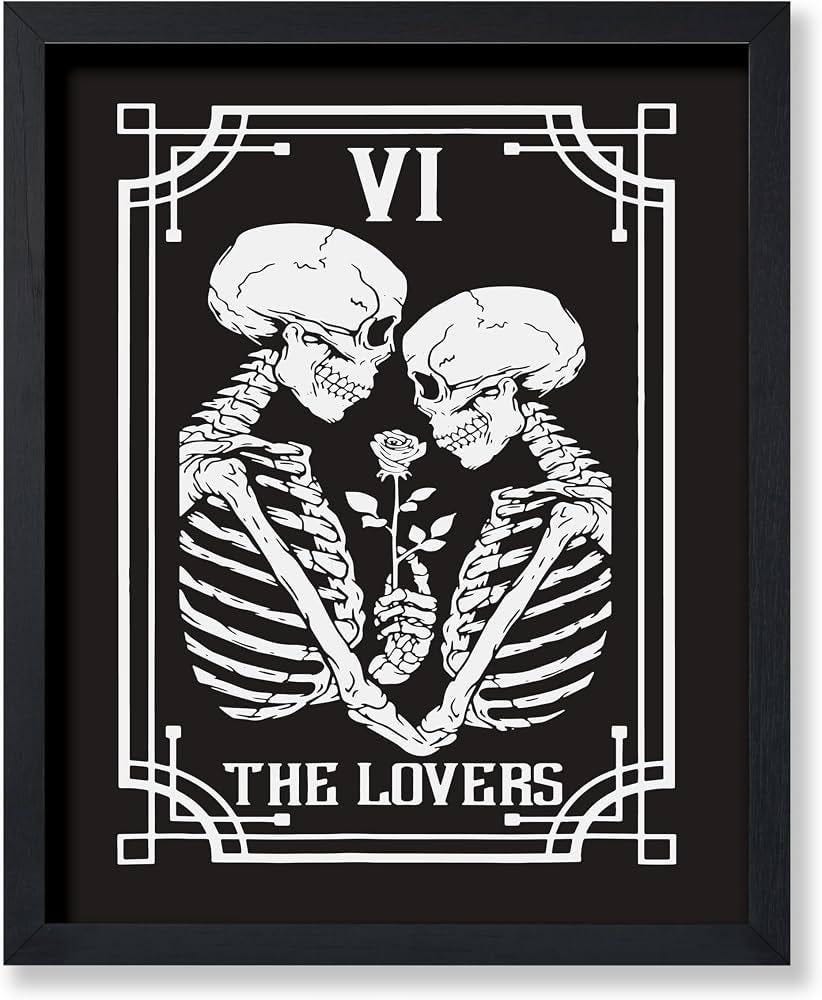
This is what it is all for in the first place, to bring protection, healing, solace, joy, laughter, love, and wisdom into our shared and interconnected lives.
When a person comes down from peak experiences meeting various beings in the liminal, there is often a corresponding depression. Mystics speak of the desert experience, being spiritually dry, or the dark night of the soul. Humans are not meant to always live at the heights of spiritual ecstasy. To be functional in the world, to be of service to other people and the living things in the environment, a poet must know how to ground herself in the routines of daily living. The hearthstone is far from being a constraint to hamper the soul. It is a place returned to with joy. We can’t always live on top of the mountain.
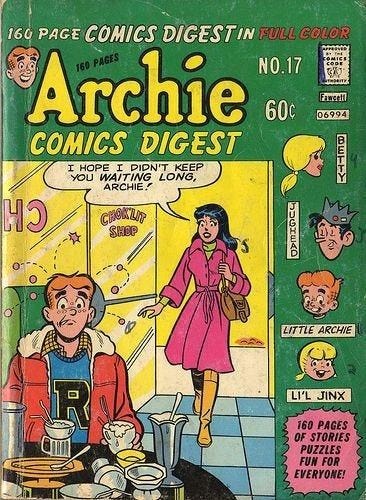
A Bard should also know “children’s games, comic books, bubble-gum, / the weirdness of television and advertising.”
A poet should be relatable and write things that are relatable. Yes, ascend the summit to that mountain of spiritual experience and bring back what you found. Then take your kids, grandkids, nieces or nephews out for ice cream or watch them at baseball or karate practice. Remember hide-and-seek, hunters-and-hunted, kick-the-can. Go to the comic shop or library and load up on graphic novels.
The great living science fiction master Rudy Rucker mentioned in his autobiography Nested Scrolls (highly recommended) how much he had learned about tone, plotting, and the flow of stories from reading comic books. It’s a real pleasure not to be ignored.
The same can be said for our popular, commercial music. I love a good pop song. My notion of pop might be different from others (Wire’s song “Kidney Bingos” to me stands as one of the best pop songs written) but there is a joy in a catchy melody. Knowing some of these melodies is important to the aspiring Bard because it can draw people in. Simple pleasures add nuance to life, and when they are gone, we often mourn that loss.
Sometimes what is needed in life is a bit of a distraction. It’s amazing the way problems often solve themselves when we let ourselves forget about them for a while and go see a movie, watch a tv show.
We need to indulge in the silly and the saccharine because sooner or later we will have to get back to work. Snyder recommends work. It’s good for your soul:
work, long dry hours of dull work swallowed and accepted / and liv’d with and finally lovd. exhaustion, / hunger, rest.
Daily matters associated with the physical and practical maintenance of our lives should be undertaken in the spirit of love, because without the work and the maintenance, our communities disappear, our infrastructure falls apart.
The grindstone is what hones the blade of our sharpness. To my mind, this is one of the areas where poetry as a whole is lacking. Over the past century or more it has been shaped too much by intellectuals in the academy who have sought to escape doing their share of work. As poetry has gotten more and more academic, it has entered more and more rarified circles where only other academically trained poets read each other and then fight for the scraps of publication and influence.
Meanwhile working class poetry has moved into poetry slams, and many other fine poets just decided to be singers. If the Bardic arts are to make a comeback, the would-be Bards can’t just hide in the ivory towers. They need to be on the job and working with everyone else, getting their hands dirty. Life is dirty. It’s dangerous. Poets who haven’t worked in hard physical jobs lose out on a world of experience and the kind of knowledge of wisdom that can’t be learned from books or professors.
Snyder speaks next of “the wild freedom of the dance, extasy / silent solitary illumination, entasy”:
In the wild freedom of this dance of life with our coworkers, lovers, children and grandchildren we find the bliss of ecstasy.
When it comes time to compose a new work, we must become like hermits, withdraw into the wilderness, or a cave, or a simple quiet place. Entasy is at the opposite pole from ecstasy, and comes from the Greek word enstasis. It’s a meditative state where the seeker goes inward, and withdraws once again from the external world. In meditation the inspiration for those next lines comes over us as awen, the Druidic term for Divine inspiration.
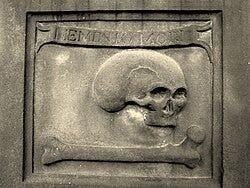
Finally a Bard should know, “real danger. gambles. and the edge of death.”
What great and bold acts of genius were ever committed by playing it safe and following the quotidian line? Who has moved into new areas of research and discovery by refusing to test boundaries and push envelopes? The treasures that are to be found in the deep may be guarded by formidable foes, but in facing them we prove our own strength.
A Bard should know the edge of death and walk it daily. In his higher capacity the Bard may even act as a guide or psychopomp into the realms of the dead. The Bard may take on the role of “speaker for the dead” on behalf of the community. With a finely tuned discernment the Bard will be able to incite proper actions on behalf of the departed when necessary, and ease those who are called into their passing. By walking on the edge of death we gain strength for what we need to do now.
Gary Snyder’s poem may be short, but learning and living what is set out in the poem is enough to fill a lifetime of ongoing work. Luckily when one is a Bard, there is no set end, no fixed point where one can say “I am finished”. Being a poet is an infinite and open-ended game. Large victories and small successes may be had along with momentary defeats. These do not constitute the end of play, but rather mark further points of development and departure.
 | A guest post by
|
Man, great essay! There’s so much here to explore. I really hate how much baby has been thrown out with the bath water in Christianity regarding nature. I’ll never forget the day it dawned on me that the natural is essentially enchanted for lack of a better term (or maybe that’s the right term) either way, it’s hard to deny
Great essay on Gary Snyder and Romantic Revival. I think your unpacking of his advice for bardic practice is especially important today as modern life is in many ways incompatible. Some balance has to be struck between hermitage (which you know I'm certainly a fan of!) and society, and unfortunately it's up to us as individuals to find that balance. I'm still very much working on mine.