
Revolutionary Loserism
A Letter to Comrades, Losers, and Other Romantics


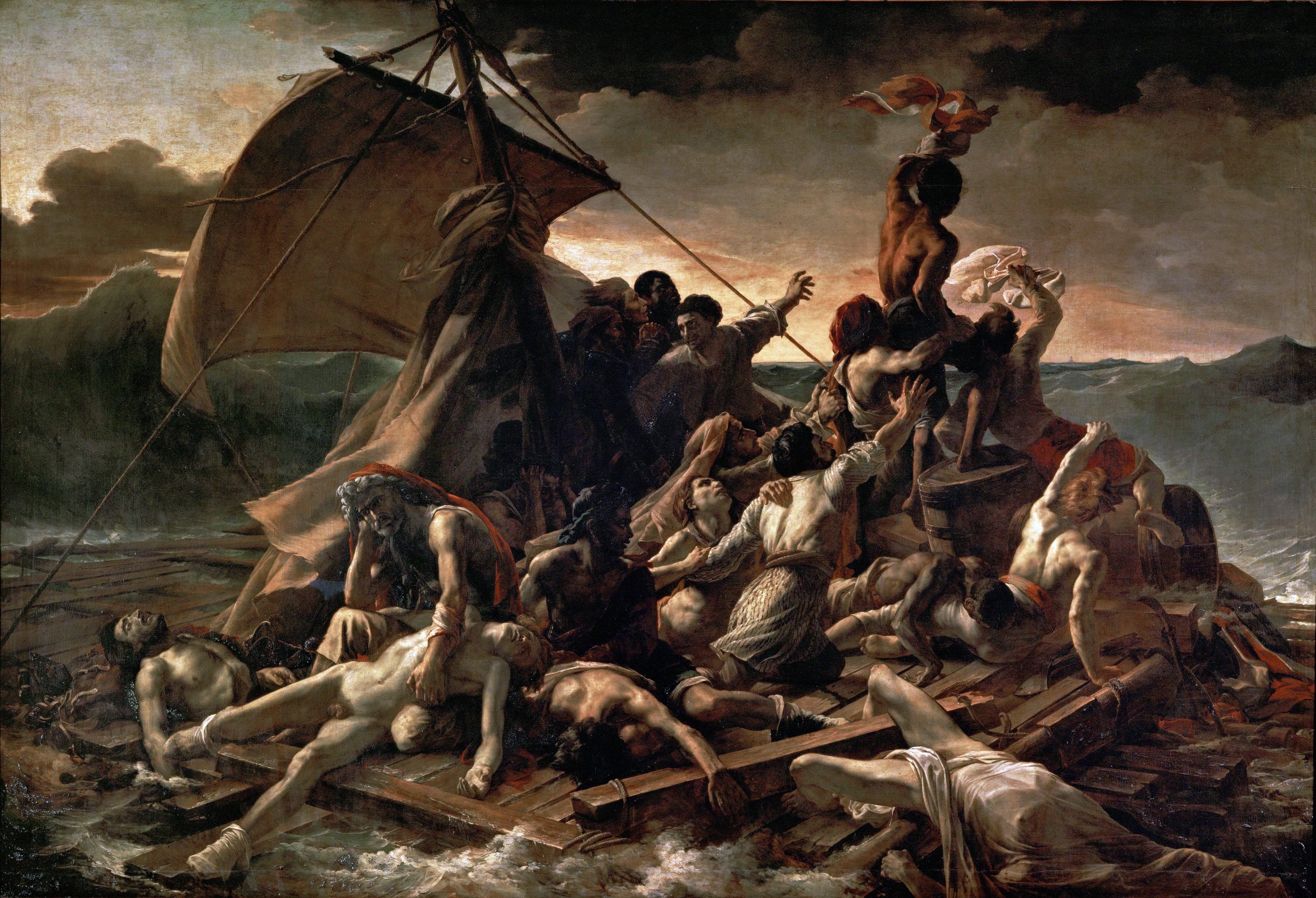
And did the Countenance Divine,
Shine forth upon our clouded hills?
And was Jerusalem builded here,
Among these dark Satanic Mills?
(From William Blake, “Jerusalem.”)
I was giving a talk on staggered collapse and the polycrisis under which our carbon-capitalism-colonialism (CaCaCo) world is ending, outlining what I saw as conditions for salvage communism in the ruins-to-come. When one comrade’s turn came to speak, he stood (or, I remember him standing) red-faced and cried accusingly, “But this is loserism!”
I place little importance on winning. Mostly, we lose. If the former is a hard-acquired value-stance, consistently though imperfectly practiced, the latter is a lesson from union organizing. “Mostly, we lose. But sometimes we win.”
My comrade’s charge was of a different nature. By “loserism” he meant a kind of giving-up.
And he was in some measure right. The topophilia (love of place) I was urging, the acquiescence to staggered collapse that motivated the book I’d just finished, the vision of salvage communism that animated me: All these were a kind of loserism.
I’ve heard his charge many times since when talking about Panic Now? Tools for Humanizing and in practical organizing conversations and work, and have come to realize that, though correct and true in its content it is wrong in being a charge, a claim against the value or utility of a political and epistemic position.
Mostly, we lose. Sometimes we win. But the workers of the world do not have this dying world to win in. We have chains to throw off, for sure, and it matters a great deal how we go about that. But “our world” is ending. Loserism accepts this, accepts that you cannot gain ground on an erupting volcano, cannot establish a beachhead on eroding sands, cannot control humanless means of production with worker power.
Revolutionary loserism means giving up on the project of 20th-century revolution. Only in such giving up does inventing 21st-century revolutions become possible. A part of what must be surrendered is attachment to earth-system conditions that are rapidly disintegrating, the “safe operating space for humanity” in which capitalism developed, was sustained by colonial violence made law, could count upon the efficiency and regularity of work-power generated by burning carbon, an operating space 20th-century revolutionary projects all presumed as their baseline. Only in giving up attachment to conditions whose loss is now baked in to all of the globally or regionally dominant modes of living on offer do we open ourselves to discovering something new, to making something materially grounded enough to be a realistic bet on revolution. It starts with accepting that we have lost.
We do not have a world to win. But we may yet have worlds to make.
But Sometimes We Win
For the post-socialist labor organizer, “Mostly, we lose. But sometimes we win” is a credo that advances possibility. It establishes the horizon of struggle. Organizing your coworkers at work mostly involves not winning what you seek. This isn’t just a practical consideration, but a philosophical one. Capital is arrayed against the development of working class consciousness in so many ways, at so many levels, and on so many terrains that the ways you fight for improvement at some few levels in a single workplace or industry or country are destined primarily for failure—and this is no impediment to the work. Because, after all, sometimes we win.
That experience, or for those not yet having discovered it in practice, that intuition about political possibility, can be tremendously motivating. As the fella said, “Ever tried. Ever failed. No Matter. Try again. Fail again. Fail better.”
It is not necessary to win this time. No matter. Failing better for long enough at a stretch, we will eventually win. This is periodically announced as a kind of revolutionary insight. Sometimes it is, with obvious counterfactual fervor, symbolically transcended with the rallying cry, “When we fight we win!” If the latter is untrue on its face, it claims a deeper truth: Sometimes we win. The wins stack up. The conditions under which we make history change thereby. When we fight, we will eventually win.
But the long march through the institutions all this implies should not be mistaken for anything other than reformism, or even a classically liberal (or liberal-adjacent, which is much the same) meliorism.
And that’s not bad per se.
You hope to build a better world. You know you cannot build it, not just here, not right now. So, you put your shoulder to the wheel a while, lay some foundations. In so doing, you draw on the lessons and frameworks and horizons of a revolutionary tradition. Mostly, you lose. But sometimes you win.
Those wins, you trust, will eventually build enough force to change everything.
Then, in actual point of fact, they don’t.
Because this world actually is ending. There’s no more time for progress-myths at the frame narrative level, even historical-materialist ones.[1]
There is much to win, and still more to love, but none of it is this world.
So it is today that the irrealism about earth-system breakdown of “But sometimes we win” makes strange bedfellows out of everyone from Silicon Valley techno-optimists to Japanese degrowthers to German trade-unionists to the Democratic Socialists of America. There is room in the bed even for the Party for Socialism and Liberation and the U.S. Democratic Party, or at least the latter’s many and competing PR teams. And can a person doubt that Milton Friedman and the neoliberal incrementalists who won their day at last are in there, too? It is a very large bed.
Reversing the Goal
The slogan should thus be dialectically superseded: “Sometimes we win. But we will at last have lost entirely.” This is not merely a philosophical prescription, a tincture to practice dying with. It is a cognitive tool for political struggle.
The goal for revolution must be reversed. In a world that is ending, the challenge is to determine how to lose well, what it means to lose well, what ruins may usefully be left behind, what practical actions in the present–what wins here and now, even–might allow the people of future ruins to imagine and build better worlds. Who knows? Perhaps we may be so lucky as to find ourselves among them.
The point is to work toward a better end of the world.
What redoubts may be gained, what fallback positions won, to secure what visions of possibility in a hotter, darker, weirder future?
The CaCaCo world is of course not the first to end. Pointing out with a superior little sneer that many worlds have already ended is the dubious luxury of people not yet willing to confront the ending of this one, not yet ready to actually lose.
Accepting that we will have lost is a romantically realist basis for pragmatic action in a dying world.
Revolutionary loserism thus reverses the presumptive goal of most political work.
If “working on the world” has meant piecemeal production of some better world out of the material of this one, and so—whether incrementalist or revolutionary in outlook—has yoked itself to belief in the basic continuity of the present world, then “losing the world” or accepting that we will have lost entirely places aspiration on the other side of a radical discontinuity.
The historical development of a world-system as an ever-more-integrated collection of political economic systems moved, however loosely you account for the thing, through something like stages. And this motivated an almost unavoidable sense of progression, of progress. For instance, twentieth-century revolutionism imagined the winning of the capitalist world for a socialism that, itself giving way, might at length beget communism.
But the capitalist world is dying. Very likely, as Jodi Dean argues in Capital’s Grave: Neofeudalism and the New Class Struggle, it is neofeudalizing.
If we suppose neofeudalism a new stage of world history, in which most of the human population is violently (whether fast or slow, the violence is real) cleared out of the way to allow for uninterrupted consumption of a global sociopath class (the fractional-class winners of a struggle waged entirely within capital’s ranks over who will benefit from full automation in a more precarious world) in an era of radically diminished metabolic resource availability (i.e., the era of CaCaCo’s dying, supply chains and “green revolution” agricultural gains alike burned up in megafires, submerged by saltwater, parched in drought, roiled by supertyphoons), at stake is not merely the matter of resistance to being genocided. (Though that’s clearly a losing battle worth fighting.)
At stake is the end of this world.
For revolutionary loserism, political possibility begins with a wager: We will have lost entirely but not absolutely.
That is to say, there is no “next stage” for this world that could fulfill the (salutary!) dreams of 19th- and 20th-century revolutionaries. We cannot premise revolutionary dreams on the continuity of earth-system conditions that enabled CaCaCo (and prior relations of production and consumption) to develop. Revolution or no revolution, the conditions under which we make history are changing at the earth-system level in ways that simply do not sustain most of our most widespread visions of progress. We will have lost entirely.
And yet, we teeming masses–many of us, for a while at least–continue kicking. We won’t be wiped out by a class enemy devoted to sustaining its consumption unabated even as the world collapses. We may not have a world to win, but there remains much for us to do in inventing the future. We will not have lost absolutely.
Seen this way, revolutionary loserism is the opposite of Fully Automated Luxury Communism,[2] the meme-become-book-become-meme-again with which well-meaning leftists mark their side of a divide on the other side of which is liberal abundance discourse. And, of course, it should imply no sympathy with the reactionary goal of near-universal deprivation and genocide, the clear trajectory projected by austerity and the lifeboat ethics of longtermism. Beyond that, need it be said that revolutionary loserism is also not a conservative impulse, not a way of imagining the past brighter? Very well, it has been said.
And yet, revolutionary loserism shares something with each of these positions.
With the FALC crowd (and its right deviance in abundance discourse), there is shared the sense that everyone’s flourishing matters equally, and that this is achieved only on the other side of hard class borders thus far imposed by capital’s violent hoarding of resources. With technofascist or neofeudal genocidality (and its left deviance in family-focused conservatism), there is shared an awareness that this world is crumbling and that something of shared use may be conserved from its present catastrophe.
Reversing the goal means we look for how to conserve-in-common, in a dying world, something of shared use that is not yet common-to-all.
What would salvage communism mean, if not just this?
Moving the Horizon
When we say, “Sometimes we win. But we will have lost entirely,” we place the horizon of action somewhere new. In some sense, this is the intuition motivating first Marx and Engels, later Lenin, in identifying abolition of the state as the ultimate goal of an achieved socialism.
How will the state have been abolished? No one can say.
But Lenin is ruthless in State and Revolution in critiquing both those content merely to seize the state and those itching to make it go away immediately. Why? Because communism is what’s on the other side of it, and this only emerges in losing something real, only emerges in losing something first won. Sometimes we win.
Against those who emphasize the meliorist withing-away of the state, i.e., against antagonists who supposed communism would emerge quasi-magically somewhere along the merry revolutionary way, Lenin writes, “To prune Marxism to such an extent means reducing it to opportunism, for this ‘interpretation’ only leaves a vague notion of a slow, even, gradual change, of absence of leaps and storms, of absence of revolution. The current, widespread . . . conception of the ‘withering away’ of the state undoubtedly means obscuring, if not repudiating, revolution.”
Lenin, like Engels polemicizing before him, has no time for either meliorism or premature declarations of victory.
Violent revolution comes first. On this, Lenin is entirely clear. On this, we today should not be quick to disagree.
But the vision of communism animating State and Revolution does not appear with the—violent revolutionary—replacement of the bourgeois state with a proletarian state. Instead, the proletarian state, like the bourgeois state before it, ensures the victory of one class in a condition of ongoing class antagonism that is fundamental to what states are and do. The dictatorship of the proletariat names capture of the state’s coercive power, the very opposite of its abolition, by the now-supreme working class.
And this does not yet constitute winning the world, is not the communist horizon.
The state’s “withering away” must be accomplished agentially at a later moment, through self-abolition of the achieved proletarian state itself, and only thereat would communism come into being, would the world be won.
As Lenin has it, “The supersession of the bourgeois state by the proletarian state is impossible without a violent revolution. The abolition of the proletarian state, i.e., of the state in general, is impossible except through the process of ‘withering away.’”
Very well for those two phases in Lenin’s moment (only the first in fact ever achieved). But so what for us?
A key point to take is the reminder that the actual revolutionary horizon of communism has never lain at violent revolution’s imagined site of victory, but rather well beyond it—even for actually existing communist revolutionaries. (Lenin being an illustrative, hardly exhaustive, instance.) The disjunctive horizon, the break after which lies something yet to be invented, is for Lenin to take place in a future loss of something temporarily won: the state.
Sufficient realism about earth-system breakdown today means skepticism about that first, temporary win. The conditions in which CaCaCo developed are rapidly changing and cannot long sustain it into the future. Comrades should recognize, then, that our temporary wins are far from likely to look like the proletarian state. Though they may indeed involve violent revolution and seizure of state or statelike power as a defensive measure, as capitalism porously gives way to neofeudalism in our own CaCaCo world that is ending, there is little reason to suppose that this old road remains the best or only or even a possible route to communism.
We will have lost entirely.
And what is Lenin’s, like Engels’, withering away or abolition of the proletarian state that must first be achieved by violent revolution but an imagined future loss of context-horizon entirely?
For many looking today to the communist horizon, it is tempting to superimpose the practically well-oiled machinery of triumphally post-Soviet liberal meliorism onto the revolutionary imaginary itself. With this blurry overview in sight, the aspirational revolutionary focuses on this battle, then that, and the next, each envisioned as steps toward eventually accomplishing something like proletarian seizure of the state, an achieved socialism. Progress toward socialism would be assumed (now, once more) to occur within the context-horizon of a more or less stable world.
But that once somewhat plausible vision can no longer be anything but sheer fabulism.
We today are not 20th-century revolutionaries. We do not have a world to win but rather are losing the world that made us. The context for revolution, whether you call it earth-system or Gaia, is changing fast, far faster than can be accounted for by guidance spun out from the old categories and canons of revolutionary thought. We today, witnessing CaCaCo’s staggered collapse and staggering along within this collapsing world and habitually failing to make much sense of it, cannot plausibly imagine the stability of context-horizon that would make winning “the proletarian state” (or its watered-down half-step approximations both institutional and anti-institutional: the United States’ imaginary Green New Deal, Europe’s rapidly dying Green Deal, or China’s Ecological Civilization on the one side; Global South convulsions of youth revolt with foreshortened horizons on the other) a sensical aspiration.
But there’s a bright side to all that.
The achieved socialist state must wither away and beget communism as a losing of somewhereness, a losing of context-horizon. And the somewhereness of our world is in fact already being lost, will we nil we.
Revolutionary loserism looks to the violent coming supersession of those state-forms that have hitherto been dominant and asks: “And then what?”
We need not seek to win the world, nor to worry about failing. We will have lost entirely, but not absolutely.
Today’s revolutionary challenge is to move the horizon of communism forward: not to fail better but to lose better.
Loserism Beyond Defeatism
Here, then, we pick up the question of revolutionary defeatism.
A little historical context is helpful, since with it the material incommensurability and shared heart of this original slogan with that of revolutionary loserism becomes clear.
In 1915’s “The Defeat of One’s Own Government in the Imperialist War,” Lenin articulates clearly the stakes of his argument. Hell, it’s right in the title.
What the CaCaCo order would eventually term World War I was what? A war of imperialism, a war among imperialists—and not equally capable imperialists, at that. Revolutionary agitation involved actively pursuing the defeat of those imperialists nearest oneself in this war. The story is not merely a matter of historical interest.
For Lenin, international coordination among revolutionary groups (whether the largely bourgeois Social-Democrats in the Russian Duma or the more “advanced” socialists in Austria and Germany) was at once entirely feasible in principle and extremely difficult as a matter of practice. Do matters stand better for us today, in a world where communication is constrained by ubiquitous and highly granular surveillance analyzed machinically, where the communist hypothesis has lapsed to the level of a conjecture outside all but a few locales?
In 1915, Lenin thought there could be no question that “an understanding between [local revolutionary groups] of the various belligerent countries on joint revolutionary action against all belligerent governments was entirely possible.” Revolutionary defeatism presumed such an understanding.
Can we hope for something similar in today’s many conflicts, or tomorrow’s many, many more? Can we hope, like Lenin, that global revolution stemming from coordination of collective class response across belligerent states in the wars-to-come is possible? Really? Can we?
There’s no value in insisting you can win what you cannot. To do so is cowardice, not valor.
Lenin’s “revolutionary defeatism” was a practical local response to the real material conditions of WWI, a wager on what could be done with those conditions and on what might be done in coordination with others making that same wager elsewhere. (That he was far from wrong is evidenced not only in the Russian Revolution of 1917, but no less in the—ultimately failed, but nonetheless completely state-rearranging German Revolution of 1917-23.[3]) It presumed incredibly strong trade unions throughout the industrial West and a revolutionary bourgeoisie emerging throughout the agrarian East. It invited comrades to agitate for the defeat of tsarist Russia in anticipatory solidarity with comrades agitating for the defeat of their own belligerent governments throughout the rest of the warring states. It hinged on widespread high valuation of socialist and communist Ideas.
Those are simply not our conditions.
To the contrary, our own material conditions develop at the tail end of a world-order that was very much still coalescing at the outset of the 20th century. They are the conditions of that order’s coming end.
We may thus take better inspiration from a different moment in Lenin’s essay on revolutionary defeatism.
Along the way of making his case, he describes Russia as “a most backward country, where an immediate socialist revolution is impossible.” This is a kind of thoroughgoing realism, a loserist commitment to the impossibility of the specific outcome one is fighting for in one’s specific context. Lenin had arrived in 1915 at the conclusion that there was no chance of socialist revolution in Russia in the near term. Obviously, arriving at this conclusion in no way interrupted Lenin’s coeval commitment to fighting in that context for that well-defined outcome all this same. But he announced the conclusion.
What else should we call Lenin’s own attitude in this precise moment of the text—not his slogan of revolutionary defeatism, but his actual attitude toward it while urging its adoption (and by contrast with the winnerism of many of his rousing polemics)—but revolutionary loserism?
A Loss Worth Fighting For
All that said, does it matter terribly if Lenin was on the whole a revolutionary loserist? We must be regardless. There is no world to be won.
At stake is a loss worth fighting for.
The practical horizon of revolution today will be constituted by practical coordination of decisions on the question of what it means to lose well, what it looks like to lose on behalf of future communards who will build worlds salvaged from our ruins.
Does losing well involve bouts of revolutionary defeatism? Does it call for the mass strike, for sabotage, for taking up arms and seizing states?
Why would it not? We will not have lost absolutely.
Revolutionary loserism does not dictate the tactics, but locates the horizon of struggle. Knowing we will have lost entirely, knowing the CaCaCo world constituting the old horizon for anyone who might encounter these words is dying, knowing there is not time to march through institutions or fail better or believe in progress, knowing the water is rising and the flames bearing down and the sickness is in our very throats, why would we not redouble efforts close to home, increase tenfold our emphasis on making something powerful and capable and loving and useful for conserving-in-common what is currently not held-in-common precisely in the places where we are, places we may even still have time to learn to love?
No chain of better failures will have yanked open the gates of freedom. The strict contrary. Our challenge is to live usefully, which in a genocidal age is to say revolutionarily, toward the horizon of revolutionary failure.
Over that horizon, a state withers and a world where many worlds are possible beckons, demanding translocally coordinated radical action now.
[1] I am indebted to Mary Witlacil for a thinking of progress-myths as not just damaging or bad in a sense frequently associated with Romanticism, but as also being a luxurious attitude toward the future for which we no longer have time. Her work on this is mostly forthcoming, but intimations of the point appear in a recent review.
[2] For one fine critique of the “luxury” vision’s real appeal and profound ecological incoherence, see Dan Barrow’s “FALC and Its Discontents.”
[3] Pierre Broué’s The German Revolution, 1917-1923 remains one of the most crucial, and sorely under-read, histories of Marxist revolution available.
Ira Allen is a professor of Rhetoric and Political Theory. He is the author, most recently, of Panic Now?: Tools for Humanizing.
 | A guest post by
|
brilliant essay that trades in the scarcest commodities of our times, nuance and authentic humility
From my Christian Romantic standpoint, the problem with Revolution is that Lenin's "second moment" will never come via politics, because the place past that horizon is the eschaton—eternity, not the future. So all that ever happens is the first moment. Always the orgy of violence and a bunch of shattered eggs, but never the promised omelet; just a bunch of puppets with egg on their face. (And in my understanding, Lenin was a sadistic sociopath who was probably just glad to have an excuse for the violence.)
It seems to me, though, that with your framing of the Revolution as awaiting after we have lost entirely in *this* world, you're coming incredibly close to the traditional view that New Jerusalem will descend at the end of all worlds. An intriguing framing that I haven't seen before.