
Spring in its Cruelty
On Sanguinary Spring Festivals, Sacrificial Fertility Rites, and the Cruellest Aprils


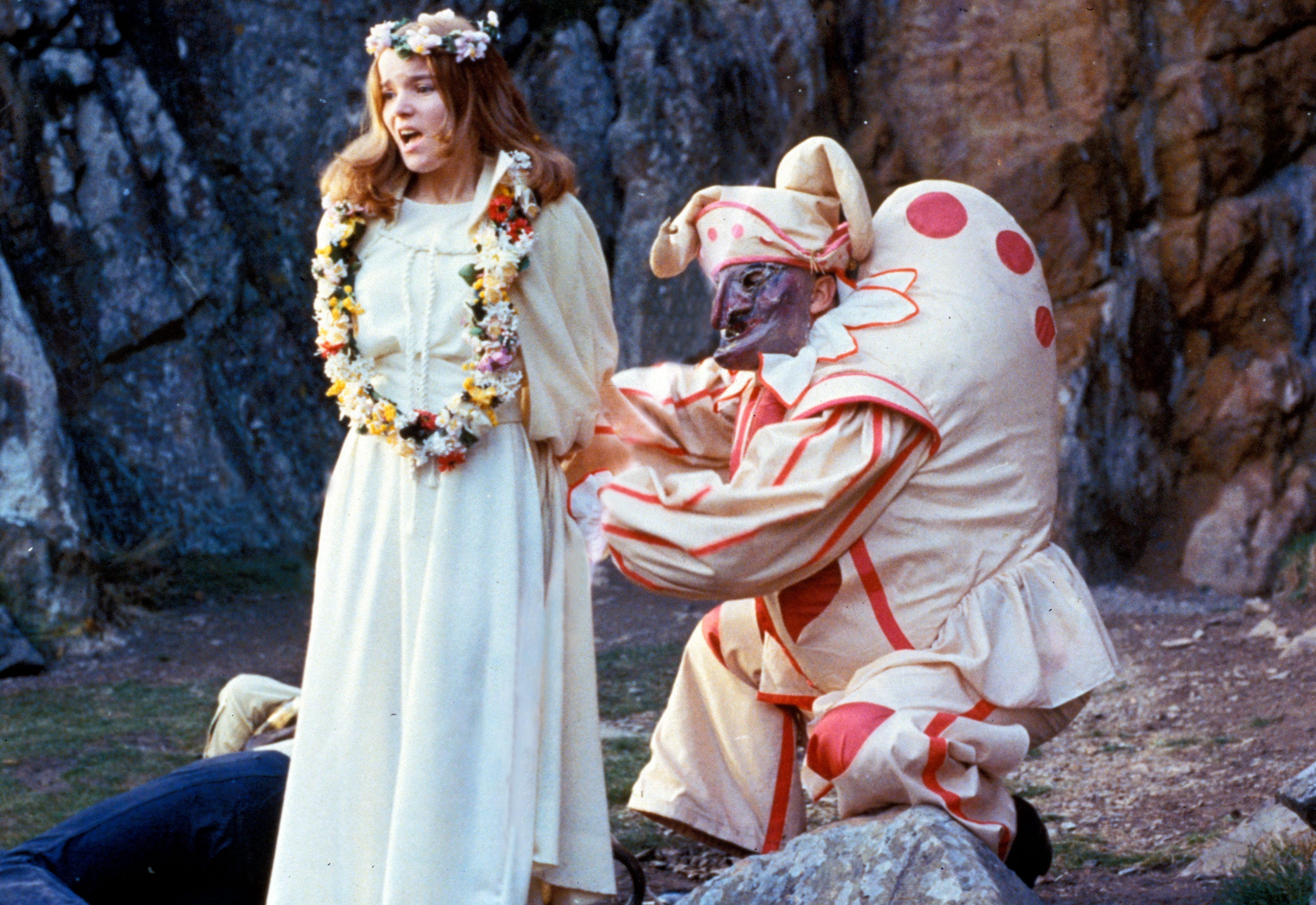
On the violent undercurrent of the season from T.S. Eliot and the Romantic elegists to bog bodies and the British folk record.
‘April is the cruellest month.’1 It is 1922, and the world has been abruptly roused to the modernist wreckage of the Western Front. How could April be anything but cruel, wrenching lilacs from a ‘dead land,’2 perhaps better left to dormancy? T.S Eliot’s opening to The Waste Land stands as a subversion of Geoffrey Chaucer’s sweet April showers in his ‘General Prologue’ to The Canterbury tales:
Whan that Aprille with his shoures soote,
The droghte of March hath perced to the roote,
And bathed every veyne in swich licóur
Of which vertú engendred is the flour3
Chaucer’s depiction is erotic, luxuriant even. Spring dances over the land and the earth rushes up to meet him, delighting in his sweet showers. For Eliot, this exchange is far less romantic as Spring wrenches new growth from dull, cracked earth. Many critics have interpreted this referential subversion as deliberately challenging Chaucer’s idealised pastoralism, through which Eliot constructs an utterly distinct revision of Spring for a post-war world, the two writers nonetheless agree that Spring does not emanate from the land; it is an autonomous force that acts upon it. The two works diverge in the manner of the season’s arrival. Rather than constituting a repudiation of Chaucer, Eliot offers an advancement that reveals an alternative aspect of Spring: insistent and aggressive, where the land is fickle and uncooperative. This is no contradiction but rather two facets of the same principle, both affirming Spring as a phenomenon that comes to the soil rather than arises from it. Spring possesses great agency in its arrival and therein lies the fear that there may come a time when it simply does not arrive.
We have known this, and feared it, far longer than we have been taught otherwise. The Christianised calendar gave us seasons as the gentle turning of a world held in loving hands. But that is a recent comfort. For most of human history, Spring arrived because something was offered up—in sacrifice or rite. The viciousness of the season’s return, an almost brutal bursting of life through frost, was understood to require an equal and answering violence. The structural debt of The Waste Land to pre-Christian fertility mythology is one Eliot himself made explicit. In his notes to the poem he cites Jessie Weston’s From Ritual to Romance (1920) as a foundational source, a work which traces the Grail legend—and specifically the figure of the Fisher King, whom Eliot references directly in the poem’s fifth section—not to medieval Christian romance but to the vegetation cults of the ancient world. In Weston’s reading, the Fisher King’s wound is the wound in the earth itself: it is the infertile land, suspended between seasons, waiting for the sacrificial act that will release it into Spring.4 Weston’s work, and Eliot’s poem, are later echoes of something anthropologist and folklorist James George Frazer had already traced to its source. In his foundational work The Golden Bough (1890), Frazer posits that beneath the mythologies of Adonis, Attis and Osiris and the seasonal festivals of Northern Europe lies a singular ritual logic. The life of the sacred king was the land’s life, his strength fueling its fertility. Frazer conjectures that:
Naturally, [a king’s people] take the utmost care of his life, out of a regard for their own. But no amount of care and precaution will prevent the man-god from growing old and feeble and at last dying [….] The danger is a formidable one; for if the course of nature is dependent on the man-god’s life, what catastrophes may not be expected from the gradual enfeeblement of his powers and their final extinction in death?5
Spring was the season of this killing, each flower that grew consequently was begged of nature, rather than freely given, in an exchange deemed unquestionably beneficial by the society. Oftentimes, this exchange need not require a king for a successful sacrifice, simply being named or chosen for this duty invoked enough power in itself. Ritual killing for the gain of the wider community might seem like a pop-pagan cliché, but it is a fixture of folk horror as we know it for good reason. The mythological framework of sacrifice Frazer described is far from purely theoretical; advancements in forensic archaeology have, in fact, uncovered tangible evidence of seasonal ritual violence.
In 1984, the body of a young man was recovered from Lindow Moss, a peat bog in Cheshire, England, in a state of remarkable preservation. Forensic analysis dated him to the early Roman period and established a cause of death that was, to say the least, overdetermined: he had been struck on the head, garroted, and his throat cut—a tripartite violence that many scholars have interpreted as ritual rather than opportunistic. He was in good physical condition at the time of his death, his fingernails carefully maintained, suggesting he was not a slave or a criminal but someone from the community, cared for, it seems, until the moment of his execution. Anne Ross, a lead voice on the folk traditions surrounding Lindow Man’s circumstances believes that the ‘Celtic nature of his killing is unarguable,’6 placing the act firmly within the druidic custom of the triple death, a motif apparent through multiple insular Celtic myths. If indeed deliberate, Ross theorises the death of Lindow Man would have been ‘regarded as a propitiation for the good of the whole community during some crisis such as inauspicious seasons or threats from enemy tribes.’7
The tripartite killing would have made for complete and successful sacrifice in the eyes of both the tribe and the believed supernatural recipient of the offering. Such apparent ‘overkill,’ seemed to be covering all bases in terms of cosmic obligation. Georges Dumézil applied his trifunctional hypothesis to the threefold death motif, interpreting it as a ritual enactment tied to the three societal functions in Proto-Indo-European ideology. These were considered to be sovereignty, represented by hanging or aerial death; warfare, represented by wounding or piercing; and fertility and production, represented by drowning or submersion.8 In this framework a single victim, killed three times in three distinct ways, was being offered simultaneously to all three of the forces that governed whether a community survived.
Presented only with the superficial marks of his death, the seasonal element of Lindow Man’s speculated sacrifice appears nebulous. The evidence is compelling upon closer examination. The peat preserved this unfortunate fellow so well that an autopsy revealed a final meal. His stomach contained a fragment of burnt Bannock: a tough kind of oat cake that was deliberately charred. This is not, on its own, remarkable. What makes it remarkable is the surprisingly neat link to eighteenth-century Scottish record, documented by John Jamieson in his Etymological Dictionary of the Scottish Language (1808).
Jamieson speaks of the Beltane Bannock ritual: a cake baked for the Spring fire festival, one piece marked black with charcoal, then broken and distributed by lot among the gathered community.9 Whoever drew the burnt piece was the figure designated, within the ritual logic of the festival, for the fire. By the time Jamieson was writing, the custom had softened into performance: the unlucky drawer was treated as though cast into the flames, mourned for a time by those around them, and then quietly released back into ordinary life. The academic debate about whether this represents a genuine survival of earlier sacrificial practice or a later folk invention is one that folklorist Ronald Hutton, among others, has approached with considerable scepticism, noting the difficulty of establishing unbroken continuity between Iron Age practice and early modern folk custom.10 This caution is legitimate and necessary. It does not, however, account for the burnt grain in Lindow Man’s stomach. And yet this meagre last meal predates Jamieson by nearly two thousand years and sits in his gut with the mute, intractable authority of physical evidence. Whatever one makes of the eighteenth-century custom, the charred grain recovered from this young man’s body likely places him at a Spring festival (or something functionally identical to one) in the first century of the common era, in a field in Cheshire, at the precise moment the Beltane calendar demanded its price. He drew the burnt piece, or something very like it and was not released back into ordinary life. He was offered instead to the bog, to the cold water and the dark peat, to whatever force it was that the community needed, that Spring, to appease.
The physical record closes, as physical records must, with what can be recovered and measured. But the cultural transmission of Spring’s violence did not require the continuity of documented practice to survive. Scholars of folk memory have long argued that traumatic or structurally significant cultural knowledge persists through channels that resist formal documentation, instead surfacing generations later in image, in metaphor, in the persistent emotional register of a season or a colour or a sound. It is in this light that I have often found the Romantic poets’ repeated return to Spring as a site of violence and grief becomes legible. The Romantics were writing in a century that had largely forgotten the ritual Spring fires and had never heard of Lindow Man. They had not read Frazer, who had not yet written. They had not read Weston. And yet the knowledge is there in the poems, unmistakable and rather harrowing.
This thread of cruelty nestled amongst budding leaves is greatly apparent in Percy Bysshe Shelley’s 1821 Adonais. Shelley wrote this wrenching pastoral elegy in a white heat of grief and fury, following the death of fellow poet and friend John Keats at twenty-five. It is worth pause here to note that Shelley wrote Adonais in April. This is a detail that feels, in the context of everything the season carries, almost too neat. Almost, but not quite. Certainly, Eliot at his desk a century later would not have been surprised. The title of the poem is modelled on ancient works, such as Achilleis, an epic poem by Roman poet Statius, and refers to the untimely death of the Greek Adonis, a god of fertility. The poem occupies a singular position within the Romantic engagement with seasonal violence, not least because its mythological framework makes the connection between Spring, sacrifice, and poetic death explicit.
In selecting Adonis as his elegiac vehicle, Shelley aligns Keats’s death with one of the oldest recorded narratives concerning the Spring killing. Whether consciously or by the instinct of a poet supremely well-versed in classical mythology, the choice is trenchant. Adonis dies in Spring. He dies young and at the height of his beauty. He is mourned by a goddess whose grief is inseparable from the season’s renewal because his death is the renewal. In this way, it is unsurprising that such a tale would later speak to the founding logic of Frazer’s divine king structure. The cruelty of a young death is undeniably universally understood, and yet, though the soil demands its due, some levity might be bought in the seasonal security that follows. Shelley, being Shelley, does not follow this arc so neatly. It is precisely this levity that Adonais holds in uneasy suspension. Shelley structures the poem in three distinct movements that map, with precision, onto the logic of the dying god cycle. The opening cantos enact pure grief: Urania mourns, the natural world mourns, the fellow poets mourn, and the Spring advances regardless:
the leprous corpse touched by this spirit tender / Exhales itself in flowers of gentle breath11
The earth’s renewal is shown to be not separate from Keats’s death but directly consequential upon it. The poem’s final movement inches toward transcendence, and the consolation that Keats has been made one with the eternal, but Shelley cannot fully inhabit it. In the land of the living Spring simply continues to insist on its own beauty with what reads as an indifference very close to cruelty. Perhaps Shelley himself is best left to speak:
Ah, woe is me! Winter is come and gone,
But grief returns with the revolving year;
The airs and streams renew their joyous tone;
The ants, the bees, the swallows reappear;
Fresh leaves and flowers deck the dead Seasons’ bier;
The amorous birds now pair in every brake,
And build their mossy homes in field and brere;
And the green lizard, and the golden snake,
Like unimprison’d flames, out of their trance awake.12
Lindow Man. Keats. The boy soldiers pushing up lilacs from beneath the Western Front. These are our Fisher Kings; their deaths folded into the earth’s insistence on its own renewal. Spring does not creep in gently. The season does not ask permission. It takes what it takes and returns what it returns and the bargain, as it has always been, is non-negotiable. T.S. Eliot opened The Waste Land with four words that his readers have spent a century accepting without quite knowing why.
April is the cruellest month. The why, it turns out, we know in our bones. The chosen one has always, in one form or another, drawn the burnt piece. And we have always, with the particular persistence of a species that understands the cost and pays it anyway, planted something in the ground and waited to see what came up.
T. S. Eliot, The Waste Land, ed. by Michael North (Norton, 2001).
Ibid, ll. 2.
Geoffrey Chaucer, ‘The General Prologue’, in The Riverside Chaucer, ed. by Larry D. Benson, 3rd edn (Oxford University Press, 1987), pp. 23–36 (ll. 1–4).
Jessie L. Weston, From Ritual to Romance (Cambridge University Press, 1920), pp. 118–31.
James George Frazer, The Golden Bough: A Study in Magic and Religion, abridged edn (Macmillan, 1922), p. 265.
Ann Ross, ‘Lindow Man and the Celtic Tradition’, in Lindow Man: The Body in the Bog, I. M. Stead, J. B. Bourke and Don Brothwell, eds, (British Museum Publications, 1986), p. 163.
Ibid, p. 167.
Georges Dumézil, Mitra-Varuna: An Essay on Two Indo-European Representations of Sovereignty, trans. by Derek Coltman (Zone Books, 1988), pp. 3–11.
John Jamieson, An Etymological Dictionary of the Scottish Language, 2 vols (Edinburgh University Press, 1808) I, s.v. ‘Bannock’ & ‘Beltane.’
Ronald Hutton, The Stations of the Sun: A History of the Ritual Year in Britain (Oxford University Press, 1996), p. 177.
Percy Bysshe Shelley, ‘Adonais’, in The Major Works, ed. by Zachary Leader and Michael O’Neill (Oxford University Press, 2003), pp. 532–56 (ll. 172–73).
Ibid, ll. 153-61.
 | A guest post by
|